A first-time visitor reaches Truist Park, hears the chop of pregame music, smells grilled onions near the concourse, and realizes the atlanta braves are bigger than a box score. This is a franchise with deep roots, a loyal fan base, and a game-day rhythm that feels easy once you know what to watch for.
If you're new to the team, this guide gives you the context that longtime fans carry with them. It starts with history, moves into the current club, and finishes with the practical details that make a Braves game feel like home.
The Enduring Legacy of the Atlanta Braves
A lot of teams have history. The Atlanta Braves have chapters.
Founded as the Boston Red Stockings in 1871, the franchise grew into one of the oldest and most traveled stories in American sports, with roots in Boston, a defining stretch in Milwaukee, and its modern identity in Atlanta, according to the Atlanta Braves entry on Wikipedia. For this section, all franchise history details come from that same source. If you are new to baseball, that timeline helps explain why Braves fandom can feel bigger than one city or one era.
A franchise shaped by three cities
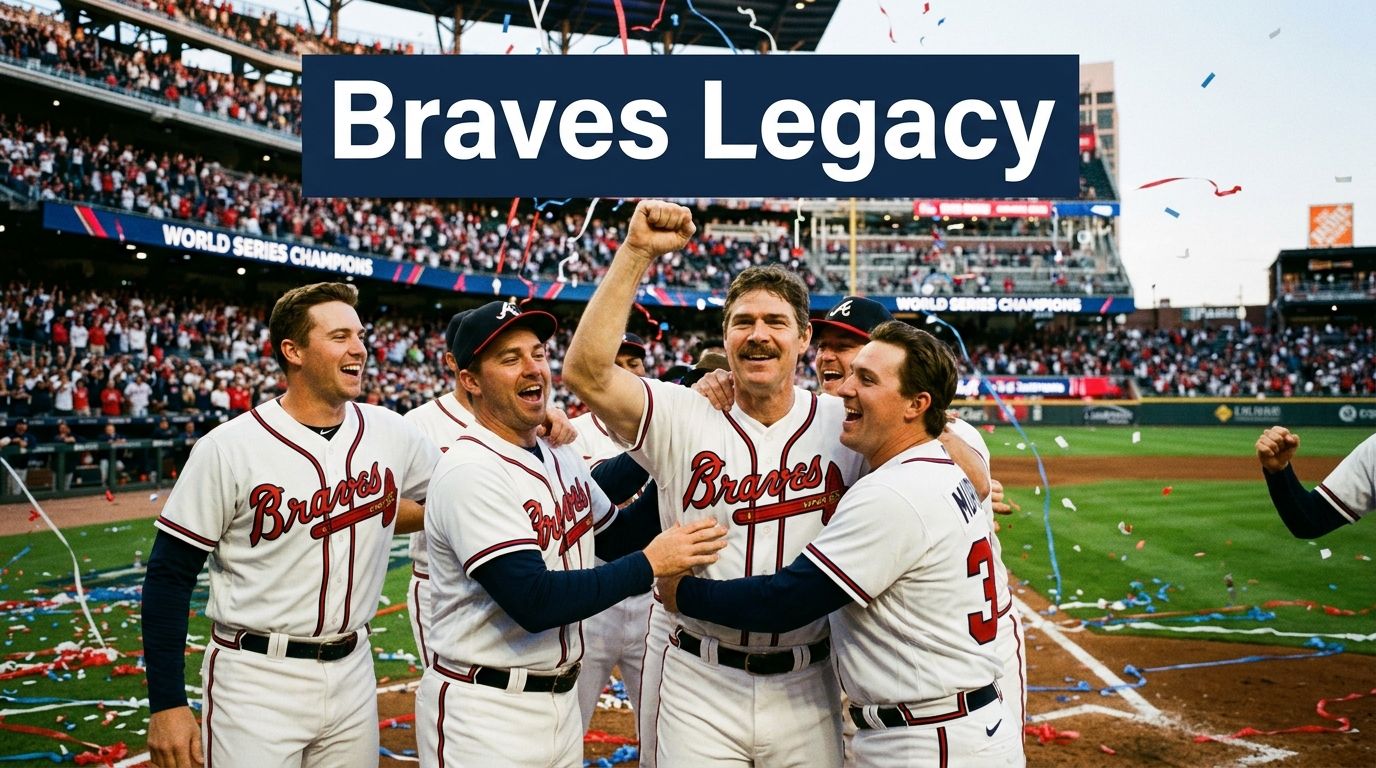
The Braves are the only Major League Baseball franchise to win the World Series in three different cities: Boston in 1914, Milwaukee in 1957, and Atlanta in 1995. They also carry a long list of division titles and four championships overall. That matters because each stop added something different to the club's personality.
Boston gave the franchise its first identity and its place in the early structure of professional baseball. Milwaukee gave the team a passionate Midwestern following and one of the sport's most memorable stars in Hank Aaron. Atlanta turned the Braves into a regional institution, the kind of team that came to represent the South for generations of fans.
A new fan can read that as a family story. The city changed, but the surname stayed the same.
Why 1914 still matters
The Miracle Braves season remains one of the clearest examples of why baseball people respect this franchise's past. The club looked finished in early July, then tore through the second half and swept the heavily favored Philadelphia Athletics in the World Series.
That comeback still shapes the way fans talk about the team. Hope is not treated like blind optimism in Braves circles. It is treated like something the franchise has earned before.
How Atlanta gave the jersey its modern meaning
When the franchise moved to Atlanta in 1966, the change was larger than a relocation on a map. Major League Baseball gained a firmer foothold in the South, and the Braves became the team many families across Georgia and the wider region passed down from one generation to the next.
No image captures that better than Hank Aaron's record-breaking 715th home run in 1974. Even if you have never watched the full clip, you can feel its weight. One swing connected the Braves to baseball history, civil rights history, and the identity of Atlanta itself.
That is part of what makes a first trip to Truist Park more interesting once you know the background. The banners, retired numbers, and reverence for former stars are not decoration. They are reminders that today's game-day experience sits on top of moments that changed the sport.
The dynasty that set the standard
Ask longtime fans what formed their expectations, and many will start with the run from 1991 through 2005. Atlanta won 14 straight division titles, reached five National League pennants, and captured the 1995 World Series. For a new fan, the easiest way to understand that stretch is to compare it to a college powerhouse that expects to contend every season. Winning was not a pleasant surprise. It became the standard.
That era also created many of the names you will keep hearing around the ballpark and in conversations with seasoned fans: Greg Maddux, Tom Glavine, John Smoltz, Chipper Jones, and Bobby Cox. They are not remembered only for numbers. They shaped the Braves' baseball style. Pitching discipline, steady contention, and the belief that a division race should run through Atlanta all grew stronger in those years.
The city mirrors that habit of renewal. Atlanta keeps building, adapting, and redefining itself, which is part of why the Braves fit so naturally here. A local example sits outside sports in this look at Atlanta's leadership in recycling innovation. The same instinct to reinvent without losing identity helps explain why this franchise still feels connected to its past while speaking clearly to the present.
That is the Braves' legacy in plain terms. The history is long, but it is not dusty. You can still hear it in the way fans talk, see it in the tributes around the park, and feel it every time an old legend's name gets a louder cheer than a casual visitor expects.
Meet the 2026 Atlanta Braves Roster
Every new Braves fan reaches the same moment. History is fun, legends are fun, but eventually you want to know who is wearing the uniform now and what kind of team you are watching.
The cleanest way to do that here is to read the Braves through the most recent verified team profile and use it as your map for the 2026 club. That approach is practical because baseball rosters shift right up to Opening Day, but a team's needs, strengths, and pressure points usually carry over. For Atlanta, that matters. The Braves still carry the expectations built by the Maddux, Glavine, Smoltz, and Chipper eras, so fans do not watch this roster like a rebuilding club. They watch it asking one question: does this group still look like Atlanta baseball?

Start with the Braves identity, not just a list of names
In the 2025 MLB season, the Braves finished 76-86, which gave them their first losing season since 2017, according to StatMuse's 2025 Atlanta Braves team page.
That record matters, but the style of the team matters more for a new fan trying to read the roster. StatMuse also shows Atlanta ranked well in hard contact indicators, including 7th in average exit velocity and 10th in hard-hit rate, while its expected batting average was 7 points higher than its actual batting average. In simple terms, the Braves often hit the ball with authority even when the box score did not fully reward them.
That should change how you watch the lineup. A cold week at the plate does not always mean the offense is broken. Sometimes the process is sound and the results are late.
The 2026 roster questions are Braves-specific
A generic baseball roster has pitchers, infielders, outfielders, and catchers. The Braves conversation is sharper than that. Atlanta fans usually sort the roster into four practical questions.
| Braves roster question | Why it matters |
|---|---|
| Who anchors the middle of the order? | The Braves are built to threaten pitchers with power. New fans should watch whether the lineup still feels dangerous in the heart of the order, especially in spots where Atlanta has traditionally expected star production. |
| Who keeps the offense from going top-heavy? | Hard contact numbers from 2025 suggest the lineup still had life, but depth decides whether traffic on the bases turns into four-run innings or stranded runners. |
| Who gives the rotation stability? | Braves fans are used to quality starting pitching because franchise history taught them to expect it. The standard is not simply surviving five innings. It is handing the game to the bullpen with control. |
| Who protects late leads? | Atlanta's recent profile showed too many walks and too many home runs allowed. That combination can waste a strong night from the offense in a hurry. |
That framework fits the Braves better than a plain position chart because it matches how this fan base talks about the team. In Atlanta, the roster is judged by whether it can hit with force and pitch with order.
Why the pitching conversation carries extra weight
The same 2025 team profile listed a 4.36 ERA, along with 197 home runs allowed and 530 walks. For a new fan, those are the warning lights on the dashboard.
Here is the simple baseball lesson. A walk puts a runner on base for free. A home run clears the bases fast. Put those together, and one missed location can turn a manageable inning into a crooked number. That is why roster conversations around the Braves often come back to command, bullpen trust, and whether the staff can avoid self-inflicted pressure.
This is also where the franchise's past shapes the present fan experience. Atlanta supporters grew up on teams that made pitching feel orderly, almost routine. When the current club gives away extra baserunners, longtime fans notice immediately because it clashes with the image of what Braves baseball is supposed to look like.
How to watch the roster in April without getting fooled
Early-season numbers can mislead new fans. A hitter can bat into bad luck for two weeks. A reliever can look dominant until one rough outing changes the ERA.
Use these checkpoints instead:
- Watch whether Braves hitters are still producing firm contact, not just whether every ball falls in.
- Watch whether the lineup has support around its central run producers.
- Watch whether starters consistently get the game to the middle innings without chaos.
- Watch whether a one-run lead feels calm or fragile.
That last point is often the fastest roster test. Good teams make the late innings feel organized. Shaky teams make every ninth inning feel like a traffic jam.
One more practical note for fans who like the ballpark side of roster watching. The club's emphasis on cleaner operations, from player development to stadium experience, fits the broader Atlanta habit of doing big things efficiently. You can see a local version of that mindset in this look at an Atlanta recycling center built for efficient service.
The simplest roster-reading rule for a new fan
Do not start by memorizing every bench piece.
Start by asking whether the Braves look balanced enough to play their preferred style. Can they hit the ball hard throughout the order? Can they avoid giving runs back with walks and long balls? Can the pitching staff restore the steadiness that fans in this city still connect with the franchise's golden years?
That is the right way to read the 2026 Atlanta Braves roster. The names matter. The shape of the team matters more.
Your Ultimate Guide to Visiting Truist Park
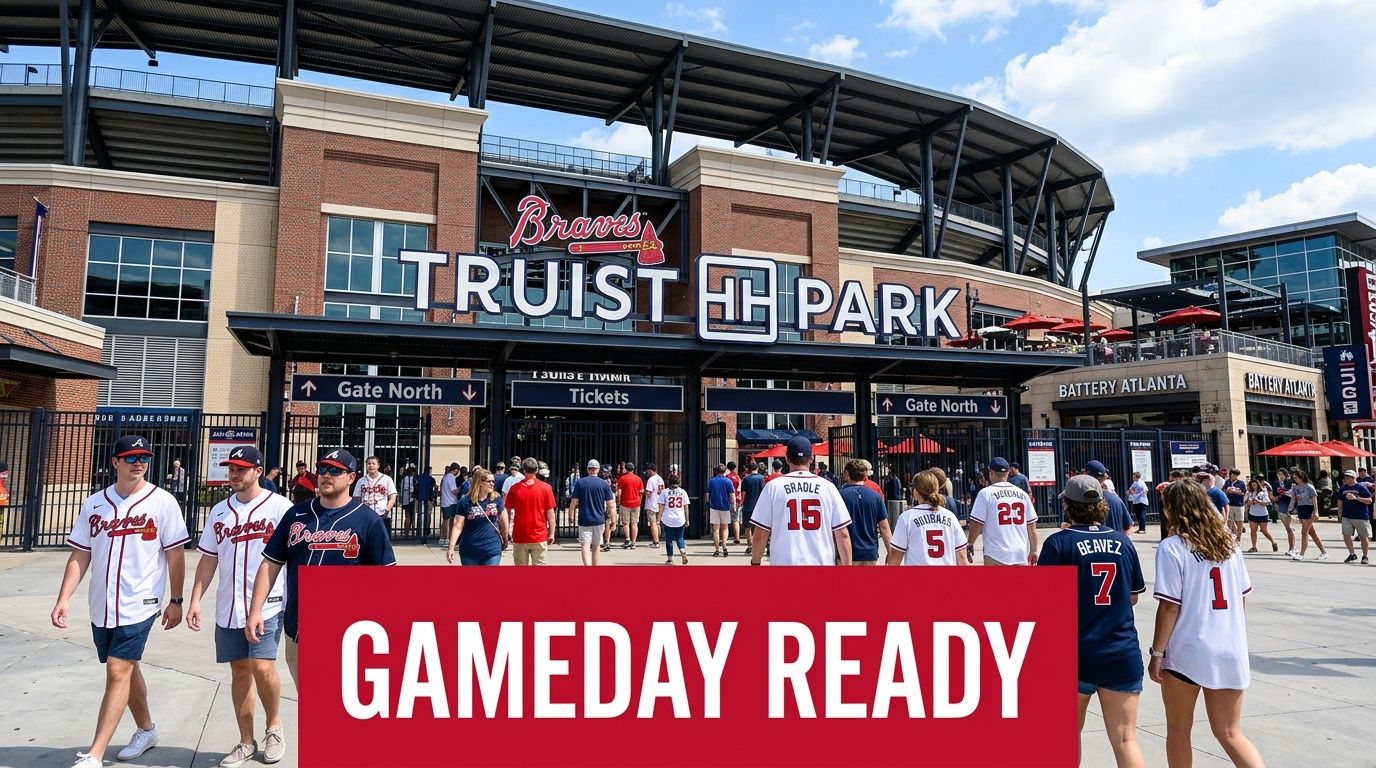
The best Braves game-day advice is simple. Make the logistics easy before first pitch, then leave room to wander once you're inside.
Truist Park rewards people who arrive with a plan. It also rewards curiosity. If you're too rigid, you'll miss the fun parts. If you're too casual, you'll spend half the night standing in the wrong line.
Getting there without starting the night stressed
The first decision is transportation. Most fans choose one of three routes.
- Drive and park: Best if you're going with a group or want full control over arrival and departure.
- Rideshare: Useful if you don't want to deal with parking lots after the game.
- MARTA plus a final connection: Often a good choice for people staying elsewhere in metro Atlanta who want to reduce parking hassle.
The key is to decide before you leave, not while traffic is building.
Parking strategy that actually works
New visitors often make the same mistake. They focus only on the lot closest to the stadium.
A better approach is to think in tradeoffs:
Closer lots
You walk less before the game. You may wait more after it.
Slightly farther lots
You add a few extra minutes on foot, but leaving the area can feel smoother.
Arriving earlier than you think you need to is the easiest way to improve the entire night.
That extra time gives you space to clear security, find your section, and still enjoy the area around the ballpark.
What to see once you're inside
Truist Park isn't a place where you should rush straight to your seat and never move. Walk the concourse once. Get your bearings. Let the ballpark teach you its layout.
A smart first lap usually includes:
- Monument Garden: Franchise history comes alive here in a visual, fan-friendly way.
- Sightline check: Even if you know your section, take a moment to see the field from a few angles.
- Concourse landmarks: Pick one meeting point in case your group gets split up.
The best way to get a hot dog
This sounds minor until you're hungry in the third inning.
Don't wait until a pitching change or the middle of a packed intermission between innings. Lines spike when everyone moves at once. The better window is earlier, or during quieter stretches when the crowd settles in.
A simple food plan for first-timers
- Scout first, buy second: Walk a bit before committing.
- Grab one classic item: A hot dog is part of the experience.
- Add one local or specialty choice: Ballparks are more fun when you try something that feels tied to the place.
- Avoid peak rush moments: The shortest line is often the stand that's a little off your main path.
If you've got time before the gates or after the game, the nearby district adds another layer to the visit. This overview of our recycling center in Atlanta for efficient service also gives useful local context for the area around the city and its business activity.
How to move around the stadium like a regular
Most first-time fans overestimate how hard it is to move around Truist Park. The easier method is to break the visit into zones.
- Entry zone: Find your gate and orient yourself.
- Food zone: Pick a target stand before you're starving.
- View zone: Walk to a railing spot and take in an inning from a different angle.
- Seat zone: Return before the count gets deep so you don't disrupt a row.
Accessibility and comfort
If you're attending with someone who needs accessible seating routes or a lower-stress path through the park, sort that out before game day. Ballparks are much easier when the plan matches the group's needs.
Bring patience, wear comfortable shoes, and expect a lot of walking even if your seat looks close on a map. That's normal.
Game-day habit: The best nights at Truist Park usually have a rhythm. Arrive early, explore a little, eat before the rush, then settle in once the game starts to breathe.
Securing Your Seats for a Braves Game
Buying Braves tickets isn't hard. Choosing the right tickets is where new fans usually get tripped up.
The biggest question is frequency. Are you trying one game, a weekend series, or a season-long habit? The answer changes where you should shop and what value means.
The main ways fans buy
The safest route is the team's official ticket channels. That's usually where you get the clearest seat maps, schedule context, and account access.
Resale marketplaces can help when a game is in demand or when you're hunting for a specific section. Just make sure the platform is reputable and that transfer details are clear before checkout.
If you plan to go often, membership packages can make more sense than chasing single-game inventory every time. They also remove a lot of friction.
How to judge value instead of just price
A cheap seat isn't always the best buy. A good value seat is one that fits the kind of night you want.
Ask yourself:
- Do you want a full-field view or proximity to the dugout energy?
- Are you going with kids, clients, or die-hard fans?
- Is this a casual Tuesday game or a rivalry weekend?
That last point matters because high-interest games can behave differently in the market.
Reading the schedule like a fan, not a tourist
The official MLB schedule is your planning tool. Use it to spot home stands, getaway-day games, weekend matchups, and stretches where the atmosphere may feel bigger.
Promotional nights, major opponents, and late-season games with standings pressure often draw extra interest. Even if you don't know every detail of the schedule yet, you can still identify games that will likely feel more charged.
If you're comparing attendance options and broader game-day planning, this Georgia Sports Betting Guide is a useful side resource for understanding the wider sports landscape in the state.
Best habits for first-time buyers
- Check the seat map carefully: Outfield, infield, and upper-level experiences feel very different.
- Buy with purpose: A social night and a scorekeeping night aren't the same outing.
- Use mobile access early: Don't wait until you're at the gate to log in.
- Watch for timing: Buying too late can shrink your choices fast.
The atlanta braves schedule becomes easier to follow once you decide what kind of fan experience you want. Start there, then buy accordingly.
Joining the Braves Country Fan Community
Braves Country is less a zip code than a shared language. You hear it in watch parties, on road trips, in group chats during rain delays, and in the instant recognition between strangers wearing the same cap.
That culture is one reason the atlanta braves feel easy to adopt as a new fan. You don't need family history with the team. You just need a place to plug in.
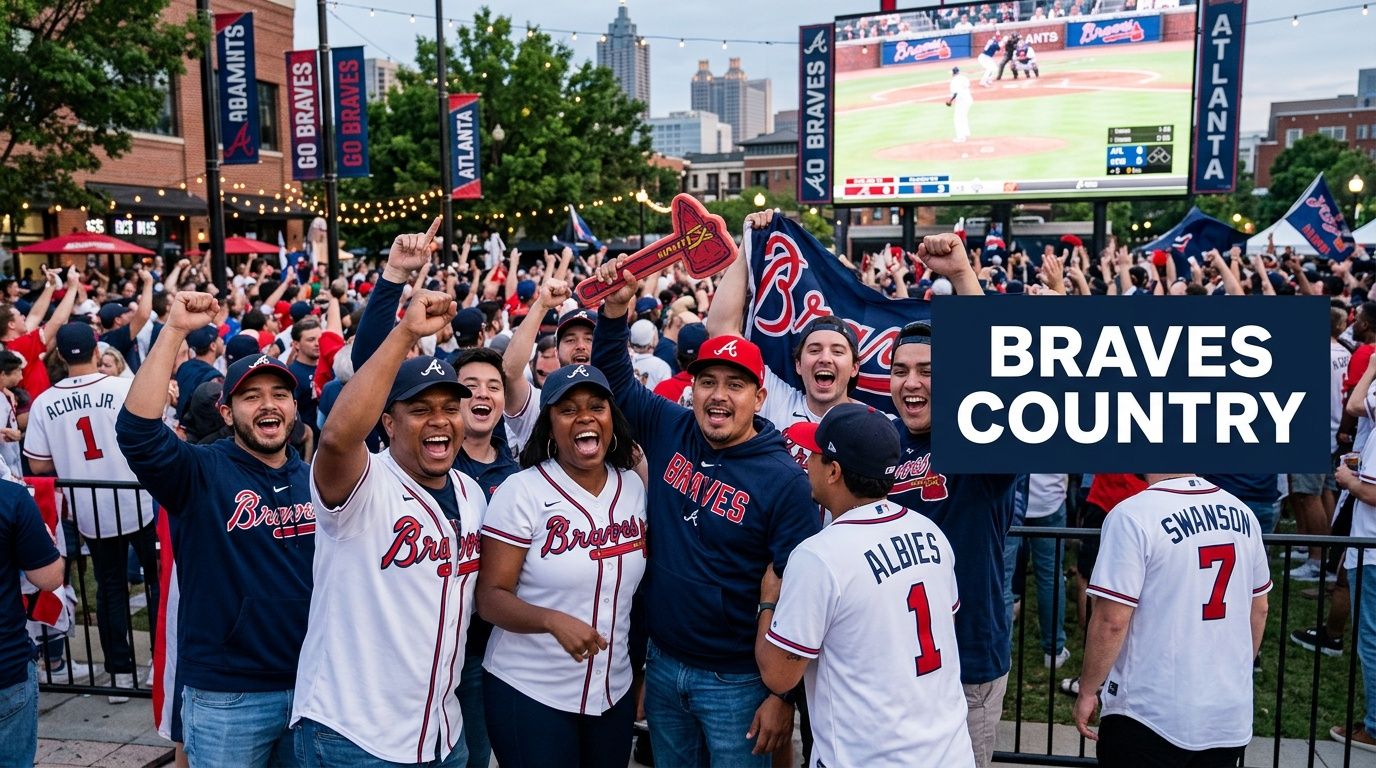
Where fandom starts offline
Some fans build their routine at the ballpark. Others start at sports bars, neighborhood patios, or public screening events.
A good watch-party spot usually has three things:
- Sound on for the game
- A crowd that reacts to every key at-bat
- Enough screens that nobody is craning around a pillar
The best place for you depends on the mood. Some people want noise. Others want conversation and space to talk baseball.
Official and informal communities both matter
Official clubs and family-focused programs can give structure, especially for younger fans and parents. Informal communities give the fan base its personality.
That means a healthy Braves fandom often includes both:
| Community type | What it offers |
|---|---|
| Official team programs | Organized access, family events, club benefits |
| Local watch groups | Shared rituals and neighborhood energy |
| Podcasts and blogs | Daily reaction, analysis, and fan debate |
| Social media circles | Fast conversation during games |
How new fans find their lane
Not every Braves fan follows the team the same way.
Some are historians. They can talk for hours about Aaron, the 1990s rotation, and old postseason scars.
Others are game-night fans. They care about lineup cards, high-stakes situations, and whether the bullpen phone is ringing.
Then there are social fans who love the crowd, the setting, and the civic identity of the club. That's still real fandom.
You don't need to know every retired number to belong. Showing up, learning the rhythms, and caring about the result is enough.
Staying connected between games
If you don't live near the park, online spaces become your clubhouse. The strongest communities usually mix news, humor, argument, and memory.
A good fan feed should help you do three things:
- Follow lineup and injury updates
- Understand what happened beyond the final score
- Hear from people who watch every night
For local Atlanta readers who like community-driven events more broadly, e-waste electronics recycling events in Atlanta reflects another side of civic participation around the city.
Braves Country works because it has layers. A first-time visitor can enjoy a single game. A returning fan can build traditions around it. Over time, that turns a team into part of your calendar.
The Braves Commitment to the Atlanta Community
A baseball team earns loyalty on the field. It deepens that loyalty through what it does away from the field.
The Braves have put visible energy into community projects around metro Atlanta, especially through efforts tied to the All-Star spotlight. The strongest part of that work is that it touches different groups rather than treating community service as one broad category.
Projects with a clear local footprint
The 2025 All-Star Legacy Initiative invested over $4 million in local projects, according to the Braves All-Star Legacy Initiative page.
That investment included:
- A mobile Warrior Fitness Trailer: Built with Camp Southern Ground to support veterans' physical and mental wellness.
- A Leila Valley farm project: Developed with Food Well Alliance to provide fresh produce to housing sites.
- Three new turf fields at Rhyne Park: Designed to improve play equity for Cobb County youth.
Those examples matter because they serve very different needs. One supports veterans. One addresses food access. One expands youth sports space.
Why that resonates with fans
Fans often ask whether community programs are symbolic or practical. These projects feel practical because they're tied to real places and real groups.
The Rhyne Park work stands out for baseball reasons too. Better access to quality fields can shape who gets to play regularly, who feels welcomed into the sport, and who sees baseball as part of everyday life.
Strong community work doesn't replace wins. It does tell fans what kind of institution they're supporting.
If you're interested in Atlanta organizations working on place-based impact beyond sports, social impact recycling in Georgia offers a different local example of service tied to community outcomes.
Key Storylines and Future Team Outlook
The biggest Braves question isn't whether the franchise knows how to win. History settled that long ago. The question is whether the next strong Atlanta team has enough fresh talent behind it.
That's why the farm system has become such a central talking point.
The issue people around the team keep circling back to
Analysts have pointed to a chronic shortage of impactful hitting prospects in the system, saying the lack of bats is "killing them", and they note that no top-100 hitting prospects have graduated recently, which puts the long-term championship window under pressure, according to this analysis of the Braves farm system.
For a new fan, that matters. Big league teams don't just need stars. They need waves of support behind those stars.
When position-player talent doesn't keep arriving from the minors, every slump, injury, or free-agent departure gets harder to absorb.
What to watch during the season
The Braves can still be compelling on any given night. But if you're trying to follow the club intelligently, focus on these themes:
- Lineup support: Are younger or lesser-known bats giving the core enough help?
- Organizational depth: Does Atlanta have internal answers when someone goes down?
- Long-term sustainability: Can the team keep contending without a stronger pipeline of hitters?
Why the future conversation feels more urgent now
Farm system concerns don't always show up in one box score. They show up over months. A team looks thinner than expected. Bench options feel limited. Reinforcements don't arrive with much impact.
That's why the outlook conversation isn't just about optimism or pessimism. It's about infrastructure.
For fans who want a practical way to follow upcoming viewing options, Fubo News has a guide on how to watch the Atlanta Braves that helps with game access and broadcast planning.
Atlanta's wider identity has always involved reinvention, and that idea shows up outside sports too. This look at revamping Atlanta's tech scene through computer recycling captures that same local habit of adapting under pressure.
The encouraging part for new fans is that the conversation around the Braves is rarely dull. Even in uncertain stretches, there are clear storylines to follow, from player development to roster depth to the everyday question of whether hard contact will finally turn into cleaner results. That's what makes baseball stick. Every game adds evidence, and every month changes the argument.
Contact Beyond Surplus for certified electronics recycling and secure IT asset disposal.