Navigating the world of waste disposal can feel like a maze for any business. You've got general trash, recyclables, and then there's hazardous waste—each with its own set of rules that often create confusion and compliance headaches. To cut through the complexity, the EPA created a special category for some of the most common types of hazardous waste.
This category is governed by the universal waste regulations. Think of it as an express lane for compliance. Instead of forcing every business through the full, rigorous, and expensive requirements of the Resource Conservation and Recovery Act (RCRA) for these items, the Universal Waste Rule offers a much more practical path. The whole point is to encourage businesses to collect and recycle these materials by making the process more manageable.
A Landmark Shift in Waste Handling
The framework we use today was put in place back in 1995. That’s when the U.S. Environmental Protection Agency introduced the Universal Waste Rule under Title 40 of the Code of Federal Regulations (CFR) Part 273. This was a complete game-changer for commercial and enterprise-level operations. Why? Because items like batteries and fluorescent lamps are ubiquitous in commercial settings, generated in volumes that the old-school hazardous waste rules just couldn't handle efficiently.
But here’s a point that every IT manager, facility manager, and business owner needs to burn into their memory:
Universal waste is still hazardous waste. The regulations do not reclassify the material itself. Instead, they provide an alternative and simplified set of rules for handling, storing, and transporting it, provided you follow them correctly.
If your business fails to follow these simplified rules, it is immediately subject to the full, stringent hazardous waste regulations under RCRA—a position no business wants to be in due to the high costs and complex requirements.
What This Means for Your Business
These regulations are written specifically for commercial businesses and other organizations—not for residential or household disposal. So if your company is replacing office lighting, decommissioning a data center full of UPS battery backups, or retiring old IT equipment, you are generating universal waste and must comply.
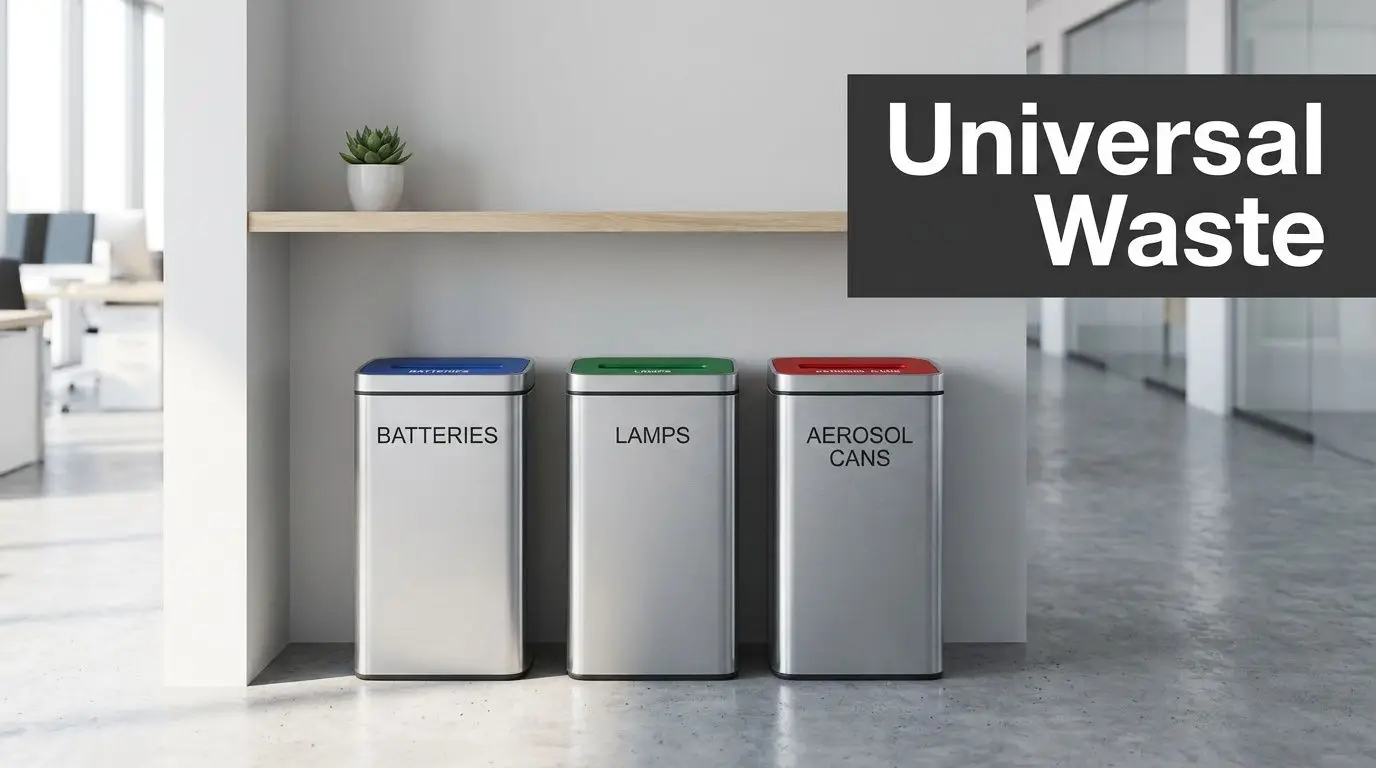
To give you a clearer picture, the federal rule identifies several distinct categories of universal waste.
Federally Recognized Universal Waste Categories
| Waste Category | Common Examples in a Business Setting |
|---|---|
| Batteries | Sealed lead-acid batteries (from UPS systems), lithium-ion batteries (from laptops), alkaline, Ni-Cad, and other commercial battery types. |
| Pesticides | Recalled or unused pesticides from landscaping or facility maintenance departments. |
| Mercury-Containing Equipment | Thermostats, barometers, pressure gauges, and various types of industrial switches. |
| Lamps | Fluorescent tubes, compact fluorescent lamps (CFLs), high-intensity discharge (HID) lamps, and other bulbs containing mercury. |
| Aerosol Cans | Partially full or spent cans of cleaning products, lubricants, or paints from commercial operations that are still pressurized. |
While this table covers the federal basics, many states have expanded their own lists to include other items, like the business electronics we handle every day.
Getting this wrong can lead to serious fines and environmental liability. For a deeper dive into what qualifies, you can review our detailed guide on the https://technostolic.com/universal-waste-definition/. At the end of the day, this simplified system makes it much easier for your business to do the right thing and maintain compliance.
How These Regulations Impact Your Business
Nearly every business, from a small corporate office to a massive data center, generates materials classified as universal waste. The first step to ensuring compliance is identifying your role as a generator. The EPA has two main categories for businesses that handle universal waste, and which one you fall into depends entirely on the volume of waste you accumulate on-site.
It's a straightforward system, and your specific compliance duties are based on which category your business falls into.
Small and Large Quantity Handlers
There are two types of "handlers," and the difference is all about volume:
- Small Quantity Handler of Universal Waste (SQHUW): Your business is an SQHUW if you accumulate less than 5,000 kilograms (approximately 11,000 pounds) of total universal waste on-site at any one time.
- Large Quantity Handler of Universal Waste (LQHUW): If your business accumulates 5,000 kilograms or more of universal waste, you are an LQHUW. This classification brings on more stringent rules, like needing to notify the EPA and maintain detailed shipment tracking records.
To put that in perspective, 5,000 kg is a significant amount of material. A single server rack UPS battery might weigh 50-100 lbs, so you'd need to be storing over 100 of them to approach the LQHUW limit. Most businesses easily fit into the Small Quantity Handler category.
The key thing to remember is this is a cumulative total. It’s not just batteries or just lamps—it's all universal waste categories combined.
These streamlined regulations have played a role in the professionalization of the waste industry. By 2021, the U.S. hazardous waste industry grew to $9 billion in revenue, an 184% increase since 2000. This growth was partly because the universal waste rules made it more feasible for companies to invest in proper recycling infrastructure.
Real-World Business Scenarios
So, where do these rules pop up in day-to-day business operations? Think about these common situations for IT and facility managers:
- For IT Managers: You're decommissioning a server room and now have a pallet of old UPS battery backups. Each one is a universal waste. They cannot be discarded; they must be stored safely to prevent short-circuits and sent to a certified facility for recycling.
- For Facility Managers: Your building is undergoing a lighting upgrade, switching from old fluorescent tubes to new LEDs. You could end up with thousands of mercury-containing lamps that are strictly forbidden from the dumpster. They must be collected, labeled, and managed as universal waste.
In both cases, the business instantly becomes a universal waste handler with clear legal responsibilities.
The Roles of Transporters and Destination Facilities
After the waste leaves your property, two other key players get involved:
- Universal Waste Transporters: These are the logistics providers who move the waste from your site to its final destination. While they don't need a full hazardous waste manifest, they must comply with DOT regulations and can only deliver the waste to another handler or an authorized destination facility.
- Destination Facilities: This is the end of the line for your universal waste. These are the permitted facilities that treat, dispose of, or recycle the materials. Choosing a legitimate, certified destination facility is one of the most critical steps in mitigating your company's liability.
Picking a professional partner you can trust to manage this process is non-negotiable. Our Vendor Due Diligence Checklist is an excellent resource for vetting potential electronics recycling vendors and ensuring they meet all compliance and security standards.
Meeting Core Compliance Requirements
Knowing you're a universal waste handler is one thing, but what does that mean for your day-to-day operations? Staying compliant comes down to a few core duties. These rules are far simpler than the full-blown hazardous waste regulations, but they are absolutely mandatory. Getting them right protects your business from steep fines and legal headaches.
Your responsibilities as a business generating universal waste boil down to three main areas: proper containment, clear labeling, and tracking how long you accumulate the waste. This is the essential playbook for any business that generates universal waste, whether it's a box of old laptop batteries or a pallet of fluorescent lamps.
Handling and Containment Procedures
Proper handling is centered on preventing environmental releases. It means storing your universal waste in a way that stops leaks, breaks, or spills from ever occurring. The exact method will change depending on what you’re collecting.
- Lamps: Keep them in a sturdy, closed container that prevents breakage. The original cardboard box they came in often works perfectly, as do dedicated fiber drums.
- Batteries: You absolutely must protect the terminals to prevent short-circuiting, which is a serious fire hazard. The easiest way is to tape the ends or place each battery in its own small plastic bag.
- Mercury-Containing Equipment: Store these items carefully to keep the glass components or mercury-filled ampules from breaking and releasing toxic vapors.
- Aerosol Cans: Collect them in a drum or another secure container. Never puncture or empty them yourself unless it's part of a certified waste processing system.
These simple, preventative steps are a world away from the complex containment systems needed for other hazardous materials. It’s one of the biggest advantages of the universal waste program for businesses.
Labeling and Marking Your Waste
If your universal waste isn't labeled, it's not compliant. It's that simple. Every container, or even an individual item if it's not in a container, needs to be clearly marked. This tells your staff, regulators, and recycling partners exactly what it is.
The label must clearly show one of these three options:
- "Universal Waste—[Waste Type]" (e.g., "Universal Waste—Batteries")
- "Waste [Waste Type]" (e.g., "Waste Lamps")
- "Used [Waste Type]" (e.g., "Used Thermostats")
This straightforward labeling is critical for keeping your collection points organized and ready for inspection. To ensure your team gets this right every time, you can find more details in our guide to universal waste labels. While we focus on electronics, many industries have similar needs; for example, labs have their own strict guidelines for handling hazardous drugs in laboratories.
The Critical One-Year Accumulation Limit
This is arguably the single most important rule to follow. A business can only keep universal waste on-site for a maximum of one year. That clock starts ticking the moment the very first piece of waste goes into a collection bin or designated storage area.
To prove you’re following the rule, you have to document how long the waste has been on-site. The standard method is to write the accumulation start date directly on the container.
This one-year limit prevents businesses from becoming long-term storage sites for hazardous materials and ensures a steady flow of waste to recycling and disposal facilities. Forgetting to track this date is one of the easiest ways to get hit with a violation. This flow chart shows the basic journey from waste generation to handler accumulation.
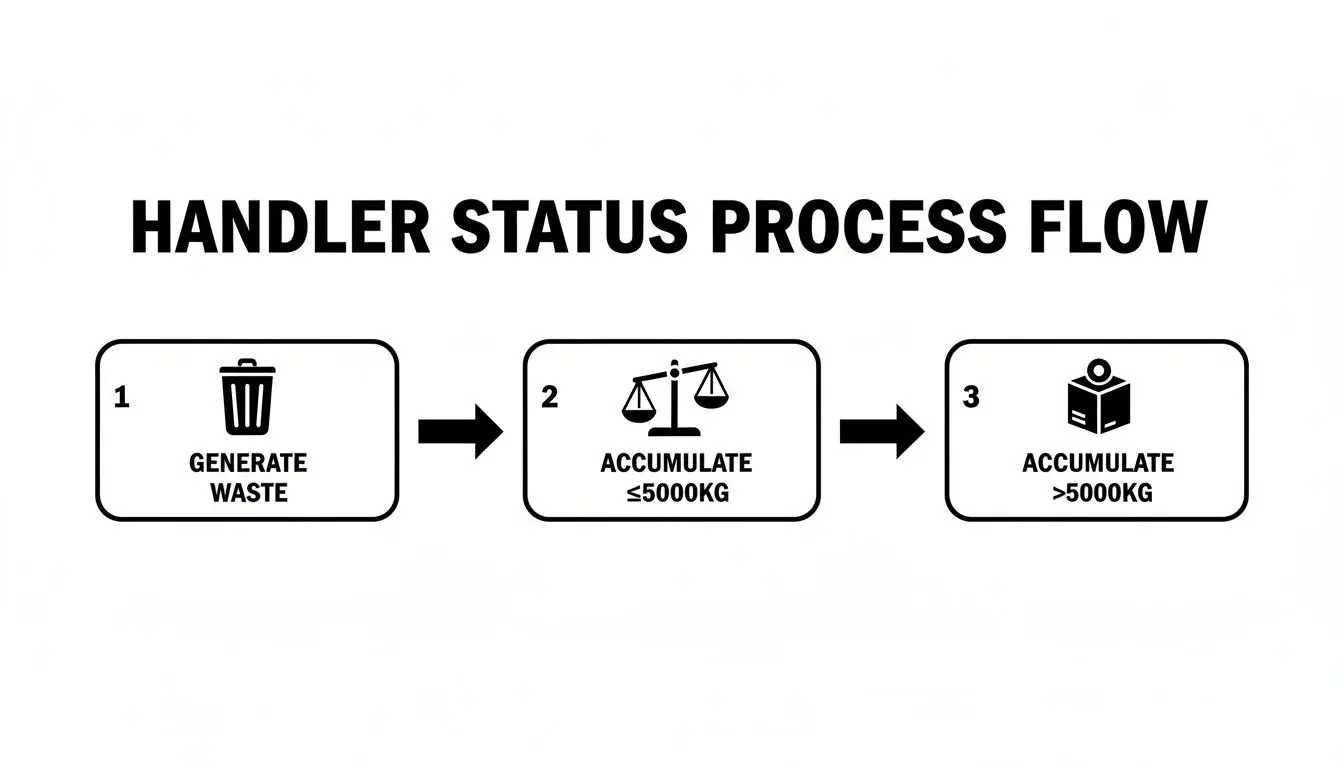
The diagram also points out the 5,000 kg threshold that separates Small Quantity Handlers from Large Quantity Handlers—a distinction that affects your specific duties. Following these core requirements helps your team build a compliant collection system before a commercial recycling partner like Beyond Surplus even arrives for a pickup.
Navigating Universal Waste in IT Asset Disposal
The world of IT asset disposition (ITAD) is intrinsically linked to universal waste regulations. While a retired server, laptop, or networking switch isn’t considered universal waste in its complete form, many of its internal components absolutely are. This creates a critical compliance challenge for IT managers already juggling data security, logistics, and value recovery for their business.
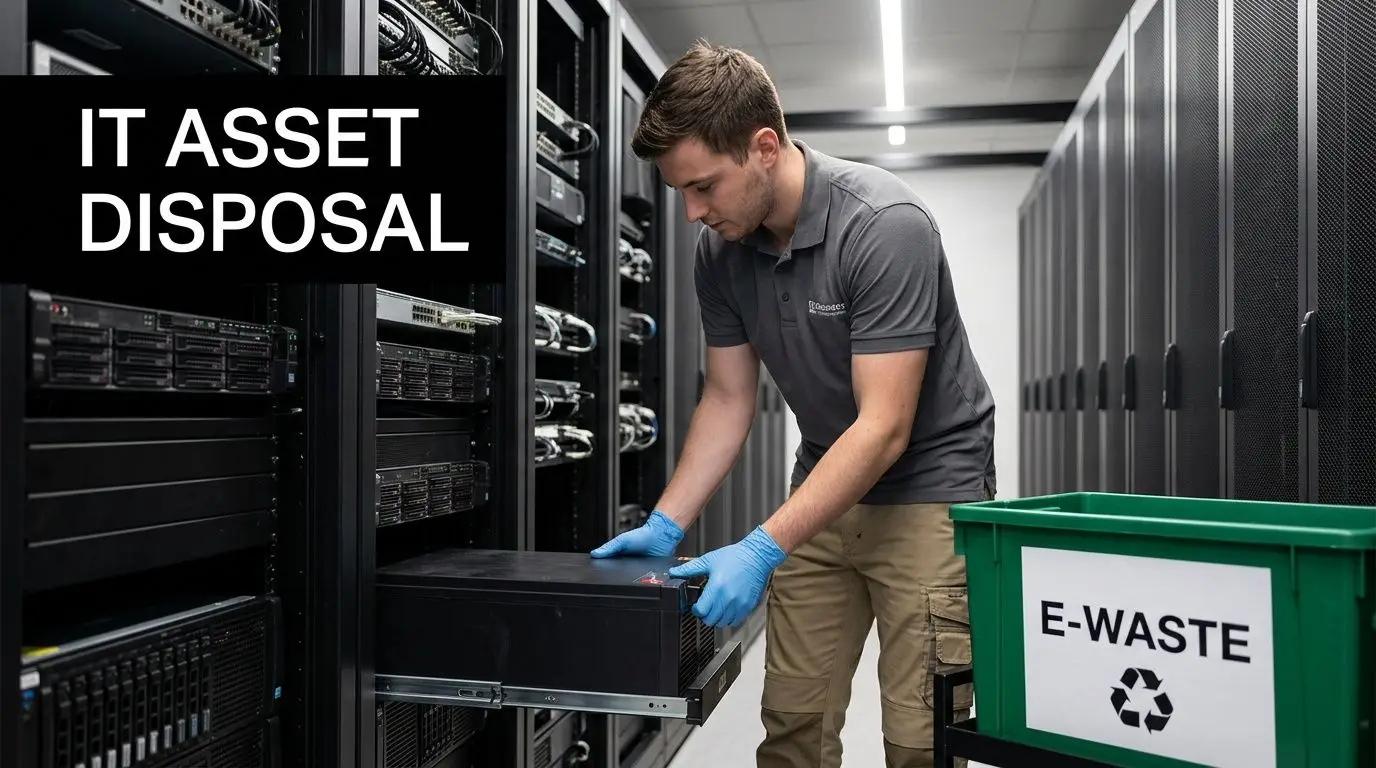
This overlap between enterprise IT equipment and regulated materials demands a sharp eye. For instance, the sealed lead-acid batteries inside your uninterruptible power supply (UPS) units are a classic example of universal waste. The same goes for the mercury-containing lamps that backlight older flat-panel monitors and the lithium-ion batteries tucked inside every single business laptop.
Without a clear disposal plan, a standard corporate tech refresh can quickly turn into a compliance minefield.
The Role of a Certified ITAD Partner
This is exactly where a certified ITAD partner like Beyond Surplus acts as your compliance shield. A professional vendor’s primary job is to take this regulatory burden off your shoulders. Our trained teams are experts at identifying and segregating these regulated components from the main flow of your electronic assets at the point of collection.
This process is systematic and designed for business efficiency:
- Identification: We methodically inspect all incoming IT equipment for universal waste components like batteries and mercury lamps.
- Segregation: Our technicians carefully remove these items and place them into separate, properly labeled containers that meet federal and state transportation guidelines.
- Documentation: We maintain a crystal-clear chain of custody that proves these materials were managed correctly from your facility all the way to a certified downstream recycling facility.
By outsourcing this responsibility, you free your internal team from needing to become experts in environmental law. You can stay focused on your core business while we handle the fine print of compliant IT equipment disposal.
Connecting Environmental and Data Security Compliance
A robust ITAD strategy is built on two non-negotiable pillars: environmental responsibility and secure data destruction. These are not separate concerns; they are deeply intertwined. A vendor that cuts corners on environmental compliance is almost certainly cutting corners on its data security protocols as well.
A truly professional ITAD partner understands that protecting your business data and protecting the environment are part of the same commitment to mitigating your corporate risk.
This means that while we are meticulously managing universal waste components, we are also performing certified data destruction on every single data-bearing device. The Certificate of Recycling and Data Destruction you receive is your official proof that you've met all your obligations—both for environmental stewardship and for protecting sensitive company information. As you build your internal processes, you can learn more about setting up a compliant program in our overview of the universal waste system.
ITAD Partner vs. In-House Universal Waste Management
Deciding whether to manage universal waste from e-scrap in-house or to partner with a specialist comes with major differences in risk, cost, and efficiency. This table breaks down what your business is really taking on when you go the DIY route compared to working with a commercial expert.
| Compliance Task | In-House Management (DIY) | Partnering with a Vendor like Beyond Surplus |
|---|---|---|
| Component Segregation | Your staff must be trained to identify and safely remove batteries, lamps, etc. High risk of error and injury. | Performed by trained technicians as a standard part of the certified recycling process. |
| Storage & Labeling | You are responsible for maintaining compliant, dated, and labeled containers on-site, taking up valuable space. | Waste is removed from your facility, transferring all storage and labeling duties to the vendor. |
| Transporter Vetting | You must find, vet, and contract a transporter authorized to handle universal waste. | We use our own fleet and vetted logistics partners, ensuring fully compliant transport from day one. |
| Documentation & Liability | Your internal records are your only defense in an audit. You retain 100% of the liability until final disposal. | You receive a Certificate of Recycling, which transfers liability and serves as your legal proof of compliance. |
Ultimately, partnering with a certified ITAD vendor isn't just about convenience; it's a strategic decision to transfer risk. It ensures that every component of your retired IT assets is handled correctly, documented thoroughly, and kept out of a legal gray area, letting you focus on what your business does best.
Understanding State-Specific Waste Rules
Do not make the mistake of thinking federal universal waste rules are the final word on compliance. While the EPA's rules provide a national baseline, they should be considered the floor, not the ceiling. Individual states have the authority to adopt these rules as-is, but more often, they create stricter or broader regulations to match their own environmental goals.
This creates a complex patchwork of laws that can easily trip up businesses operating in multiple states. This is a critical concept for any IT or facilities manager to grasp. It means a perfectly compliant process in one state could be a serious violation in another. States can—and frequently do—add their own items to the universal waste list, change accumulation time limits, or tweak labeling requirements.
State Additions to the Universal Waste List
One of the most common ways states build on federal rules is by adding new categories of waste. This is especially true in the world of IT asset disposal.
- Electronics: While federal law treats components like batteries as universal waste, some states go much further. States like California classify entire electronic devices, or "e-waste," as universal waste, which can simplify how businesses there manage old equipment.
- Paint: As of late 2025, Illinois expanded its program to include paint and paint-related waste. This now requires manufacturers to set up stewardship programs for proper collection and handling.
- Other Materials: Over the years, various states have also added items like antifreeze and cathode ray tubes (CRTs) to their specific universal waste programs.
This constant evolution means that just knowing the federal regulations is only half the battle. Your business must stay on top of these regional differences, especially if you're managing facilities or shipping waste across state lines. To see just how strict these programs can get, you can explore our overview of California electronics recycling.
A Practical Example: Georgia's Rules
For businesses here in Georgia, where Beyond Surplus is headquartered, the state has adopted the federal Universal Waste Rule largely as written. This means the core federal categories—batteries, pesticides, mercury-containing equipment, and lamps—are the main focus for commercial compliance. Unlike California, Georgia has not added whole electronic devices as a state-specific universal waste category.
This highlights an absolutely essential point for any business managing IT assets:
For a Georgia-based business, a retired laptop is not considered universal waste, but the lithium-ion battery inside it definitely is. Proper compliance means separating that battery and managing it under the specific universal waste rules.
This distinction shows just how valuable it is to partner with a national provider. An experienced ITAD vendor like Beyond Surplus knows how to navigate the specific rules for every state your business operates in. We ensure that whether your surplus IT assets are in Georgia, California, or Illinois, they are handled according to the precise regulations for that location, protecting you from accidental non-compliance. Our expertise takes the burden of tracking this complex and ever-changing legal landscape off your shoulders.
The Real Risks of Non-Compliance
Thinking your business can sidestep universal waste regulations is a dangerous and costly gamble. The consequences are not minor slaps on the wrist; they represent a serious business liability with very real financial and reputational fallout.
Picture this all-too-common scenario: an employee, meaning well but untrained, tosses a box of old UPS batteries from a server room into the regular dumpster. In that single moment, those batteries are transformed from a manageable universal waste into an illegally disposed hazardous waste. If discovered, your business faces inspections, citations, and fines that make proper recycling costs look like pocket change.
The High Cost of Getting It Wrong
The financial penalties for non-compliance are designed to be severe. Fines can be assessed per violation, per day, meaning a single forgotten pallet of batteries can quickly snowball into a financially devastating amount. The EPA and state agencies do not view these as small mistakes; they are treated as serious environmental violations that put your business on their radar.
On top of direct fines, the damage to your company's reputation can be even more costly. In today's market, where corporate social responsibility is paramount, news of an environmental fine travels fast. It can erode customer trust, damage partner relationships, and make it difficult to attract talent. A reputation for cutting corners on environmental rules is a stain that's hard to wash out.
Your Best Defense: A Certified Partnership
So, how do you shield your organization from these risks? The smartest, most effective strategy is to partner with a certified ITAD and electronics recycling vendor like Beyond Surplus. This is not an expense, but your best compliance insurance policy. When you transfer your retired assets to a certified expert, you gain a rock-solid, documented defense against future liability.
This protection is built on a foundation of key documents and verified processes:
- Certificates of Recycling: This is your official legal proof. It documents that your assets were received and handled in full compliance with all environmental laws.
- Transparent Chain of Custody: Detailed records trace your equipment's journey from your facility, proving you acted with due diligence.
- Audited Downstream Processes: A certified partner can show exactly where every component goes, proving all universal waste is sent to properly vetted and legitimate recycling facilities.
By providing this full suite of documentation, a certified partner effectively transfers the risk and liability from your company to theirs. It’s your undeniable proof that you did the right thing.
This paper trail is your best defense in an audit. It demonstrates to regulators that you have a proactive, systematic approach to compliance and managed your universal waste by the book. Handling universal waste is about managing risk. Partnering with a professional recycler gives you the expertise, documentation, and peace of mind needed to keep your business compliant, secure, and protected.
Answering Your Universal Waste Questions
Getting your head around the maze of universal waste regulations can feel like a chore. To make things easier, we've tackled some of the most common questions we hear from IT, facility, and business managers. Here are the straight answers you need to stay compliant.
Can I Just Throw Old Office Electronics in the Trash?
Absolutely not. For businesses, this is a definite no-go and often illegal. Most of your old office electronics are packed with universal waste components like batteries and mercury-containing lamps, not to mention other hazardous stuff.
Federal and state laws are very clear: businesses must manage these items properly. Trying to sneak them into the regular trash can lead to some eye-watering fines and significant environmental harm. The only compliant path forward is to work with a certified e-waste recycler.
What Is the "One-Year Rule" for Universal Waste?
This one is critical. The "one-year rule" is exactly what it sounds like—it's the maximum amount of time you can store universal waste at your facility. The clock starts ticking the very moment you begin collecting it, like when the first old battery gets tossed into a collection bin.
That start date must be clearly marked on the container or on the waste items themselves. This rule exists to make sure hazardous materials don't just sit in a back room forever. It ensures they get moved along for recycling or proper disposal in a timely way, and you can bet it's something regulators look for during an inspection.
Does My Company Need a Special Permit to Transport Universal Waste?
Here’s some good news: no, you don't. This is one of the biggest benefits of the Universal Waste Rule for businesses. Unlike other types of hazardous waste, you don't need a special permit or a complicated hazardous waste manifest just to move it.
However, there's a catch. The waste can only go to another universal waste handler, an approved collection point, or a certified destination facility.
While a special permit isn't required, you absolutely must use a reputable transporter. For your own protection and peace of mind, always choose a vendor that gives you a transparent chain-of-custody document showing the journey from pickup to final processing.
This paperwork is your proof that you did everything by the book.
How Does a Vendor Like Beyond Surplus Simplify Compliance?
Working with a certified partner like Beyond Surplus takes all the guesswork out of the process. We provide a complete, end-to-end solution for your retired IT assets, which means we handle all the universal waste components according to federal and state laws. Our team expertly identifies, safely separates, and properly packages these materials for fully documented transport.
Once everything is processed, we issue a Certificate of Recycling and Data Destruction. This official document is your definitive proof of compliance. It effectively transfers the environmental liability away from your business and confirms your sensitive data has been securely destroyed.
Ensure your business stays compliant and protected from risk. Contact Beyond Surplus today for certified electronics recycling and secure IT asset disposal services across the United States. Schedule your pickup now.