Think of the Universal Waste Rule as the EPA's common-sense solution to a widespread problem. It was designed to make managing common but hazardous items—like the old IT gear, batteries, and lamps piling up in your storage room—simpler and more affordable for your business.
At its heart, the rule encourages safe recycling and disposal by cutting through the usual red tape.
Understanding Universal Waste and Why It Matters for Your Business
The Universal Waste Rule is essentially an "express lane" for compliance. Without it, your business would be stuck navigating the complex and expensive requirements of the Resource Conservation and Recovery Act (RCRA) for every single hazardous item.
Instead, you can follow a much more manageable set of standards for storage, labeling, and transportation. This is a game-changer for any company handling electronics, ensuring that the harmful materials in circuit boards, batteries, and monitors are managed responsibly instead of just getting dumped in a landfill.
Back in 1995, the U.S. EPA rolled out the federal Universal Waste Rule under 40 CFR Part 273. This wasn't just a minor tweak; it fundamentally changed how businesses handled commonly generated hazardous waste. Before this, these items were often thrown out improperly, creating serious risks. States quickly followed suit, adopting similar rules that allowed for much longer accumulation times—up to one year—and lighter record-keeping burdens compared to the strict hazardous waste timelines.
Federal Universal Waste Categories
While individual states have the authority to add their own items to the list, the EPA established a baseline with five main categories of universal waste. Knowing these is your first step to getting your business's waste management in order and keeping these items out of the regular trash.
Here’s a quick overview of what falls under the federal rule.
Federal Universal Waste Categories at a Glance
| Waste Category | Common Business Examples |
|---|---|
| Batteries | Lithium-ion, nickel-cadmium (Ni-Cd), and sealed lead-acid batteries from laptops, UPS systems, and tools. |
| Pesticides | Recalled, banned, or unused pesticides from landscaping, agriculture, or facilities management. |
| Mercury-Containing Equipment | Older thermostats, pressure gauges, switches, and some medical devices. |
| Lamps | Fluorescent tubes, compact fluorescent lamps (CFLs), high-intensity discharge (HID) lamps, and other bulbs containing mercury. |
| Aerosol Cans | Non-empty aerosol cans being discarded, which are common in almost every type of business. |
By correctly identifying and separating these items, your company can sidestep the major financial and administrative headaches that come with full hazardous waste status. You can find out more about how to identify and classify these materials in our detailed guide on defining universal waste.
Getting this process right not only protects your business from potential liability but also reinforces your commitment to environmental sustainability.
Small vs. Large Quantity Handler Rules
The EPA understands that a small office and a massive manufacturing plant have very different waste streams. That's why universal waste rules are flexible, splitting businesses into two groups: Small Quantity Handlers (SQH) and Large Quantity Handlers (LQH).
There’s one key number that determines which group your business falls into: 5,000 kilograms, which is about 11,000 pounds.
Your company's status all comes down to the total amount of universal waste you have on-site at any single point in time. If the combined weight of your batteries, lamps, and other items stays under that 5,000 kg threshold, you're an SQH. This means you’ll have simpler, more straightforward compliance rules to follow.
Once you accumulate 5,000 kg or more of universal waste, you become an LQH. While that might sound intimidating, the rules are still much easier to manage than those for fully regulated hazardous waste. Figuring out your handler status is the first, most important step for your business.
Determining Your Handler Status
Working out whether you’re an SQH or an LQH is really just a matter of taking inventory. You need to get a clear picture of the total weight of all universal waste you’re currently storing. This includes everything from a box of old laptop batteries to pallets of fluorescent bulbs waiting for pickup.
The key is the total amount you have at any one time. Your business could generate well over 5,000 kg in a year, but as long as you ship it out frequently enough to keep your on-site total below the threshold, you’ll remain an SQH.
This quick decision tree can help your team figure out what counts as universal waste before you even start weighing anything.
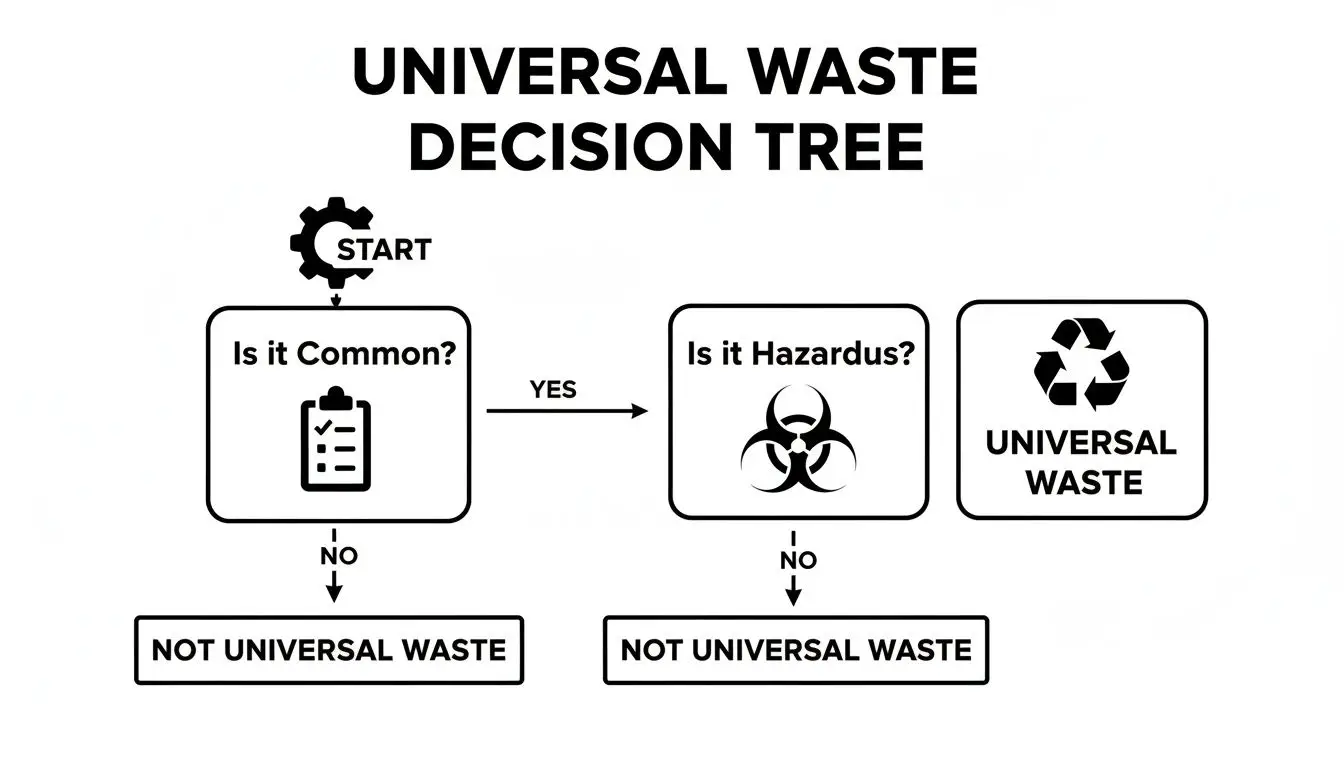
As you can see, an item only becomes universal waste if it's both a common type of waste and has hazardous properties. This makes it much easier for your team to identify what needs to be managed under these rules.
Core Differences in Compliance Obligations
While both SQHs and LQHs get to follow simpler rules, their specific responsibilities aren't identical. That 5,000 kg limit is what triggers a few extra tracking and notification duties for larger handlers.
The main differences boil down to three key areas:
- EPA Notification: LQHs have to formally tell the EPA about their universal waste activities by filing EPA Form 8700-12 to get an EPA Identification Number. SQHs don't have this requirement.
- Recordkeeping: LQHs must keep records of every universal waste shipment that leaves their site. These records—which can be simple logs, invoices, or bills of lading—need to be kept for at least three years. SQHs have no federal requirement to keep these shipment records.
- Employee Training: While every business should train its team, LQHs have a formal duty to document it. This means proving that your staff knows how to handle the waste properly and what to do if there's a spill or release.
To make it even clearer, this checklist breaks down the primary responsibilities for both Small and Large Quantity Handlers.
Universal Waste Handler Compliance Checklist
| Compliance Requirement | Small Quantity Handler (SQH) | Large Quantity Handler (LQH) |
|---|---|---|
| EPA Notification | Not Required | Required (EPA Form 8700-12) |
| EPA ID Number | Not Required | Required |
| Storage Time Limit | One year | One year |
| Waste Labeling | Required (e.g., "Universal Waste—Batteries") | Required (e.g., "Universal Waste—Batteries") |
| Shipment Recordkeeping | Not Required | Required (maintain for 3 years) |
| Documented Training | Not Required | Required |
| Response to Releases | Must immediately contain spills | Must immediately contain spills |
As you can see, even as an LQH, the compliance path is straightforward and manageable. The key is staying organized.
Working with an experienced partner like Beyond Surplus ensures every box is checked, from getting your labels right to creating a solid paper trail for audits. Our team can help your business set up and maintain your customized universal waste systems to keep compliance simple and stress-free.
Managing Storage, Labeling, and Timelines
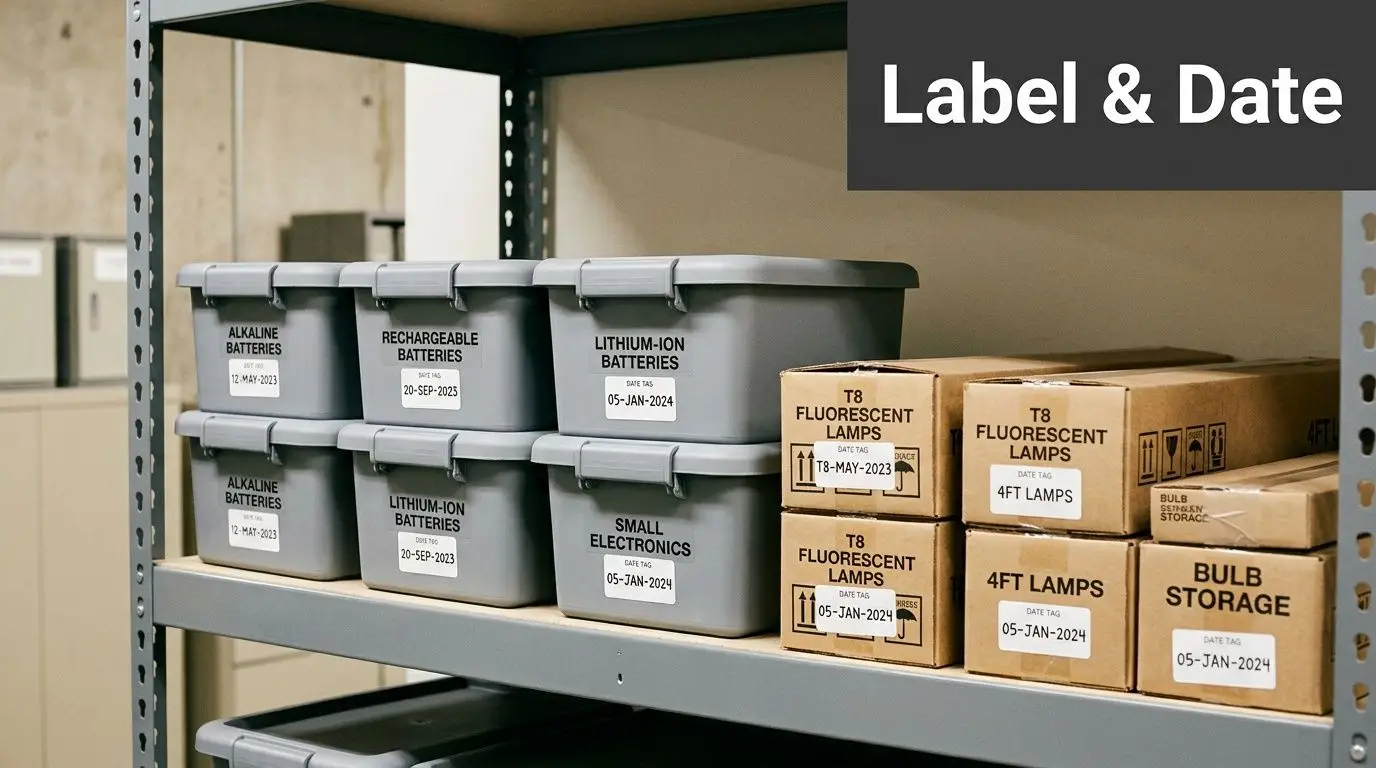
This is where the rubber meets the road for your business's universal waste program. All the planning in the world won't matter if your team on the ground doesn't get the day-to-day handling right. How you label, store, and track these items is what separates a smooth, compliant operation from one that's risking fines.
Think of these steps as the operational playbook for your facilities and EHS managers. Getting them right isn't just about checking a regulatory box—it's about keeping your workplace safe, organized, and ready for any inspection.
Proper Labeling Procedures
You absolutely have to get labeling right. Every single container, or even an individual item, needs to be clearly marked to show what it is. This simple habit is your first line of defense, communicating what’s inside and making sure it gets sorted correctly.
The EPA gives you some flexibility here, but the intent is to be perfectly clear. You must label each container with one of the following phrases:
- "Universal Waste—Battery(ies)"
- "Waste Battery(ies)"
- "Used Battery(ies)"
The same logic applies to other waste streams, like "Universal Waste—Lamp(s)" or "Universal Waste—Mercury-Containing Equipment." It’s a straightforward system designed to eliminate any guesswork. For a closer look and some downloadable templates, check out our guide on creating effective universal waste labels.
The One-Year Accumulation Clock
One of the biggest perks of the Universal Waste Rule is the generous timeline for storage. Your business can accumulate universal waste at your facility for up to one year. That "accumulation clock" starts ticking the moment an item becomes waste or when you first place it in a collection bin.
To prove you're within that one-year window, you have to mark the start date on the container itself or track it in a log. This date is your proof of compliance if an inspector shows up. Forgetting to date your containers is one of the most common—and most avoidable—violations we see.
This long timeframe gives your business plenty of flexibility to gather enough material to make shipments to a recycler cost-effective. It's a huge advantage over the much tighter 90 or 180-day deadlines for other types of regulated hazardous waste.
Safe Containment and Spill Response
How you store your universal waste is just as critical as how you label it. The guiding principle is simple: keep it contained so nothing gets released into the environment.
- For Batteries: Store them in sturdy, closed containers to stop any leaks. If you spot a battery that’s damaged or leaking, it needs to go into its own separate, non-conductive container immediately.
- For Lamps: The best place for them is in their original boxes or another type of protective packaging that prevents breakage. A broken fluorescent bulb releases mercury vapor, and that triggers a very specific and immediate cleanup procedure.
- For E-waste Components: Things like circuit boards should be stored in a way that protects them from being crushed or physically damaged.
Your team also needs a plan for when things go wrong. If a spill happens—like mercury from a cracked lamp or acid from a battery—your employees must know exactly how to respond safely. That means having spill kits nearby and being trained on the right cleanup and disposal protocols for any resulting materials.
Finding Universal Waste in Your IT Assets
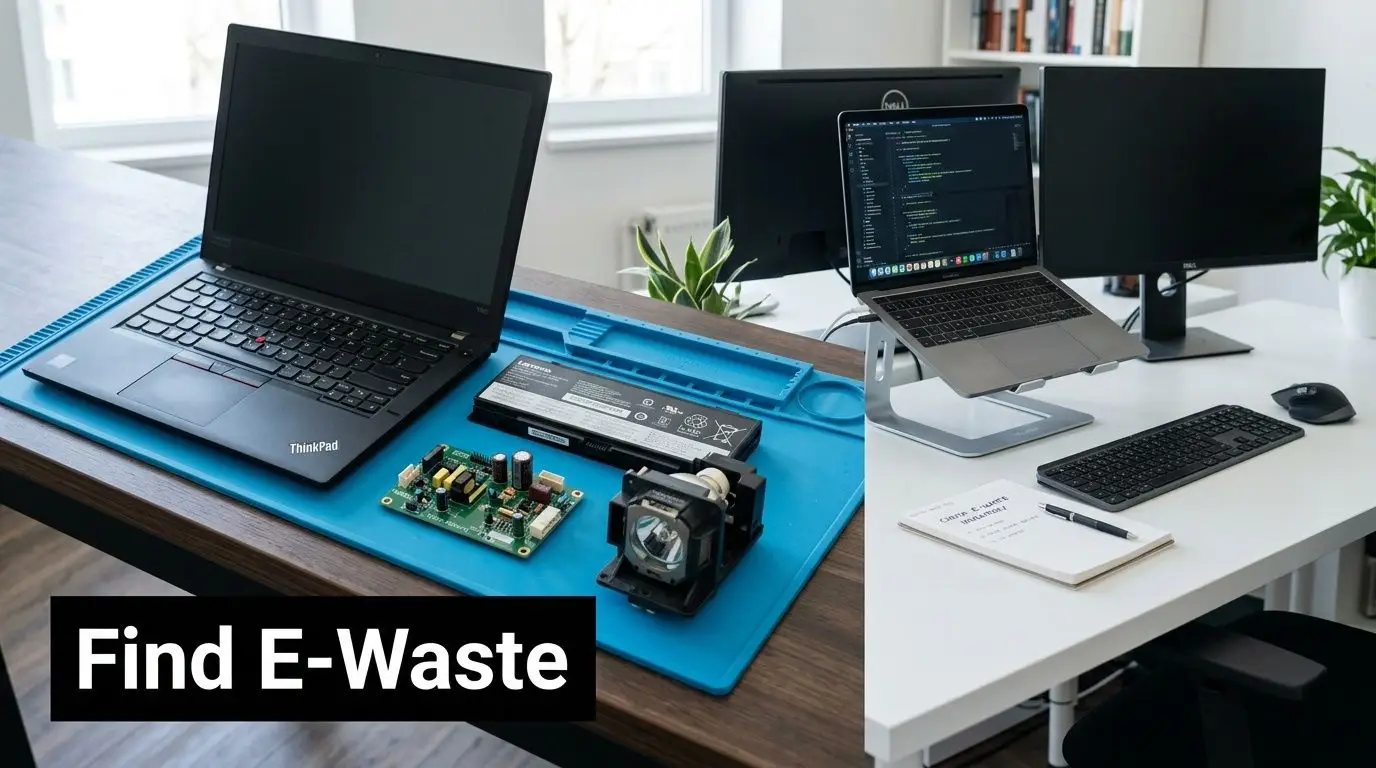
The Universal Waste Rule isn't just some abstract regulation. It becomes very real the second you step into your company’s IT storage room or data center. These rules directly affect any business with electronic equipment, as many common devices contain components that need special handling.
Figuring out which items fall under this category is the first, most crucial step toward building a compliant disposal process. For IT and facilities managers, this means looking past a device's outer shell to understand what's really inside. Universal waste is often hiding in plain sight.
Common IT-Related Universal Wastes
Most modern offices are packed with equipment that contains universal waste. Your team needs to know how to spot and separate these items during an asset refresh, office cleanout, or decommissioning project. The most common examples are easy to overlook in the daily grind.
Here are the key universal wastes you’ll find in IT assets:
- Batteries: This is by far the most common category. We’re talking about the lithium-ion batteries in laptops and tablets, the heavy sealed lead-acid batteries in uninterruptible power supplies (UPS), and even older nickel-cadmium batteries.
- Mercury-Containing Lamps: Older LCD monitors and many projectors use cold cathode fluorescent lamps (CCFLs) for backlighting. These contain small but significant amounts of mercury. While LEDs are more common now, millions of these older units are still in use or sitting in storage closets.
- Mercury-Containing Equipment: It’s not just about lamps. Some high-end switches, relays, and specialized scientific instruments also have mercury components that qualify as universal waste.
Your business simply can't toss an old UPS system or a flat-screen monitor in the dumpster without thinking about what's inside. These regulated components require a much different approach.
State-Specific E-Waste Rules
The federal rules provide a baseline, but states have the authority to add their own, often stricter, requirements. This is especially true when it comes to electronic waste. Several states have expanded their definition of universal waste to include a wider range of electronics, which can make compliance tricky for businesses operating across state lines.
A perfect example is California. The state classifies cathode ray tubes (CRTs), circuit boards, and other electronic parts as universal waste. This means that in California, the entire motherboard from a server is a regulated item needing special handling—not just the little battery on it.
This state-by-state variation shows why you need a partner who knows the landscape. A disposal strategy that’s perfectly fine in one state could get you into hot water in another. This is where professional IT solutions can help streamline compliance and keep your business on the right side of the law.
Why an ITAD Partner Is Essential for Your Business
Trying to manage all these different and often hidden waste streams is a huge compliance headache for any business. Partnering with a certified ITAD specialist like Beyond Surplus turns that challenge into a simple, managed process. Our services are built to identify, separate, and properly manage all the universal waste we find in your old IT equipment.
Whether we're handling a full data center decommissioning or a simple office pickup, our process ensures every regulated component is handled correctly. We provide complete chain-of-custody documentation, including Certificates of Recycling, which serves as your proof of compliant disposal. This paperwork legally transfers liability away from your business and protects you from the risks of improper handling.
To get a better handle on the framework, you can learn more about the universal waste system and how it applies to your company's assets.
Shipping Your Universal Waste and Keeping Records
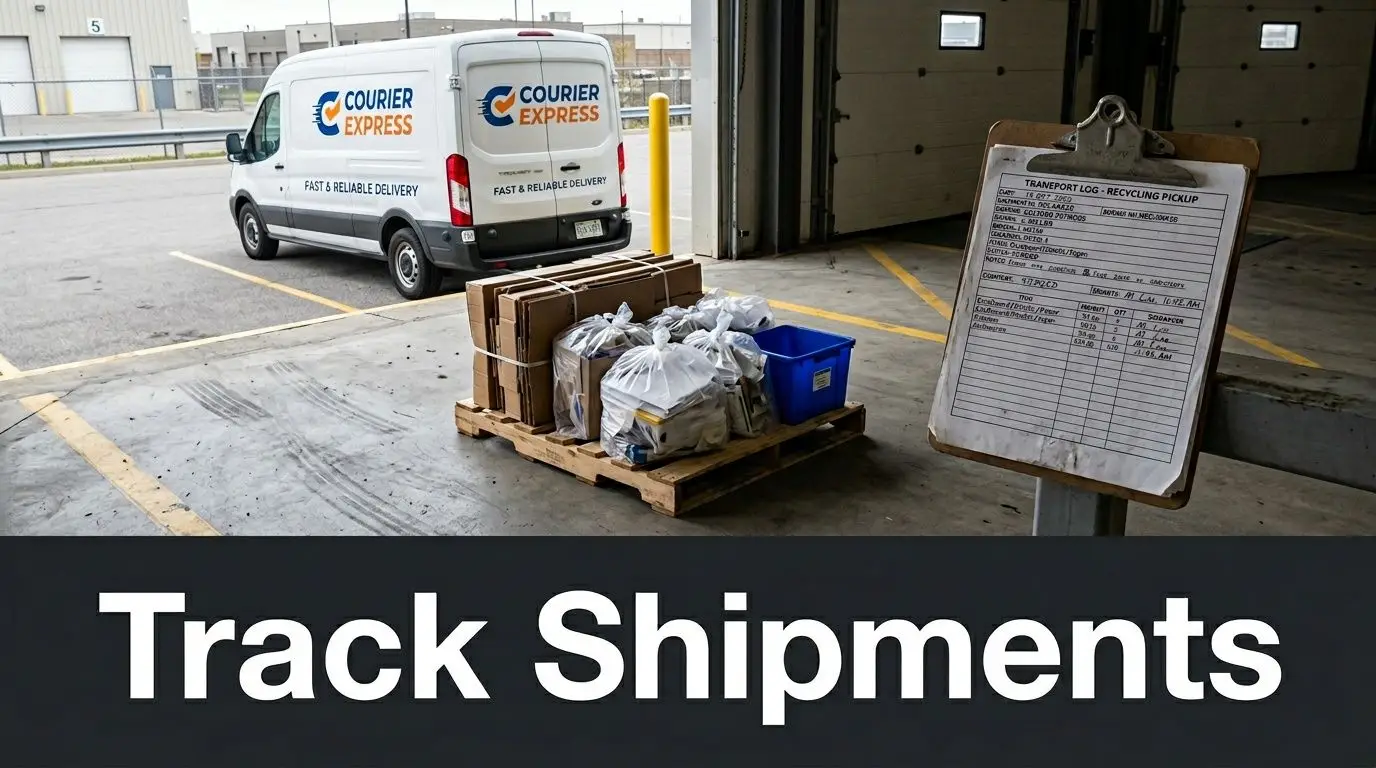
Getting universal waste off-site is one of the biggest perks of the entire program. If you've ever dealt with the mountain of paperwork that comes with standard hazardous waste, the logistics for universal waste will feel like a breath of fresh air. It’s simply less complex, less expensive, and requires far less administrative legwork.
The best news for most businesses? You do not need a formal hazardous waste manifest to ship universal waste. That single exemption removes one of the most tedious and time-consuming parts of the process, making it much more manageable for your team.
But don't mistake "no manifest" for "no records." The documentation you're required to keep depends entirely on your handler status.
Paperwork for Small vs. Large Handlers
As we’ve discussed, your compliance duties shift depending on whether you’re a Small Quantity Handler (SQH) or a Large Quantity Handler (LQH). This is especially true when it comes to tracking your shipments.
- Small Quantity Handlers (SQH): If your business stays under the 5,000 kg (11,000 lbs) accumulation limit, federal rules don’t force you to keep records of your shipments. Your main job is to make sure the waste goes to a proper destination facility.
- Large Quantity Handlers (LQH): Once your site crosses that 5,000 kg line, recordkeeping is no longer optional. You must keep a log of every single universal waste shipment you send off-site.
These records don’t have to be overly formal. An LQH can use a simple logbook, a bill of lading, an invoice, or any other document that tracks what left and when. The key is that you must hold onto these records for at least three years from the shipping date.
What to Include in Your Shipment Records
For LQHs, a clear paper trail is your proof of compliance. At a minimum, your shipping log or bill of lading needs to capture these key details for every shipment:
- The name and address of the destination facility (where the waste is going).
- The quantity of each type of universal waste, either by weight or number of units.
- The date the shipment left your facility.
This information creates a simple, auditable record showing you're managing your waste responsibly. Think of it as your basic chain-of-custody document.
The goal here is simple accountability. Even without a manifest, LQHs need to prove where their waste went and when. This straightforward log is your evidence that you've met your regulatory duties and transferred liability the right way.
Sending Waste to a Compliant Destination
The regulations are crystal clear on this point: your business can't just send universal waste to the local dump or an uncertified scrap dealer. Your chain of custody must end at a facility that is legally authorized to accept it.
All universal waste has to be sent to one of two places:
- Another Universal Waste Handler: This is often a consolidation facility that gathers waste from multiple businesses before sending it to a final processor.
- A Destination Facility: This is a certified recycling or treatment facility permitted to handle the specific waste, like a dedicated battery recycler or a plant that reclaims mercury from lamps.
This is exactly why partnering with a reputable, certified ITAD and electronics recycler is so important. A partner like Beyond Surplus acts as that compliant destination, giving your business the documentation you need to prove your materials were managed correctly from the moment they left your doors. You can learn more about what this documentation looks like by reading about the universal hazardous waste manifest and how modern recordkeeping has evolved for universal waste.
How We Help Your Business Achieve and Document Compliance
Meeting universal waste requirements isn't just about following the rules to avoid fines. It's about protecting your brand, managing risk, and showing that your company is a responsible corporate citizen. This is where working with a certified IT Asset Disposition (ITAD) provider like Beyond Surplus changes everything. We turn what can feel like a regulatory headache into a simple, straightforward process for your business.
When you trust us with your ITAD and electronics recycling, you're directly handling your universal waste obligations correctly. Our services are built specifically to manage the regulated parts in your old technology, from the lithium-ion batteries in your laptops to the mercury-containing lamps in your office projectors.
The Paperwork That Protects Your Business
Our process is all about clear accountability. We don’t just haul away your old equipment; we give you the official documentation that serves as your legal proof of proper disposal. This paperwork is your shield, proving you’ve legally transferred the liability for your assets to a certified and responsible partner.
These documents are standard for all our business clients and form the core of any compliant ITAD program:
- Serialized Asset Reports: We provide a detailed list of every single asset we process for you, tracked by serial number. This creates a clear, auditable trail from your inventory to its final, secure disposition.
- Certificates of Recycling: This is your official guarantee that your electronics were recycled according to all local, state, and federal environmental laws, including the Universal Waste Rule.
- Certificates of Data Destruction: We provide this certificate to confirm that all data on your hard drives and storage media has been completely destroyed, meeting standards like NIST 800-88 and protecting you from a potential data breach.
This isn't just a formality—this paperwork is your official record showing you've met your universal waste requirements and other critical compliance duties.
Partnering with a certified ITAD vendor is an investment in risk management. These official certificates provide concrete, auditable proof that your environmental and data security duties have been fulfilled, strengthening your compliance and your company’s commitment to sustainability.
More Than Just Checking a Box
Our goal is to help your business do more than just meet the minimum requirements. We guide you through the complex web of environmental rules, turning a potential business liability into a powerful statement of corporate responsibility. Our team makes sure all universal waste is properly identified, separated, and sent to the right downstream recycling partners.
Ultimately, we give you peace of mind. You can get back to focusing on your business, knowing your end-of-life IT assets are being managed in a way that’s secure, environmentally sound, and fully compliant. This strategic approach protects your brand and turns a regulatory chore into a clear win for your sustainability goals.
Frequently Asked Questions About Universal Waste
When you're dealing with universal waste, a lot of questions can pop up. It's a confusing topic, and the details matter. Let's walk through some of the most common questions we hear from businesses to clear things up.
Do I Need to Train Employees on Handling Universal Waste?
Yes, you absolutely do. Training your team is a non-negotiable part of the universal waste rules for every single business. The level of training you need to provide, however, depends on how much waste you handle.
If you’re a Small Quantity Handler (SQH), your main job is to make sure your employees know the right way to handle the waste and what to do in an emergency, like a spill. The goal is straightforward: keep everyone safe and prevent accidents.
For Large Quantity Handlers (LQH), the requirements are a bit more formal. You can't just train your staff; you have to document that the training happened. This creates a paper trail proving your team is fully up-to-speed on all the required safety protocols.
What Happens if I Mix Universal Waste with Other Waste?
Mixing universal waste with anything else is a recipe for expensive compliance headaches. The golden rule is simple: always keep your business's waste streams separate.
- Mixed with Hazardous Waste: If you accidentally combine universal waste with a regulated hazardous waste, the entire mixture is now considered hazardous. This means you’ll have to manage it all under the much stricter—and more costly—hazardous waste regulations.
- Mixed with Regular Trash: Tossing universal waste into your non-hazardous solid waste is illegal. It completely defeats the purpose of the program, which is to keep these items out of landfills. Your business will be looking at fines and penalties if you get caught.
The best thing your business can do is keep separate, clearly labeled containers for each type of universal waste you generate. It’s a simple habit that stops cross-contamination in its tracks and keeps your disposal process clean, compliant, and cost-effective.
Can I Throw Universal Waste in My Company Dumpster?
No, never. Federal and state laws are crystal clear on this: businesses are strictly forbidden from throwing universal waste into their regular trash dumpsters. The items contain hazardous materials like lead, mercury, and cadmium, which can do serious damage to the environment if they end up in a municipal landfill.
All universal waste generated by a business has to go to an authorized facility. This could be another universal waste handler or a certified destination facility that specializes in recycling or proper treatment. Working with a specialist is the only way for your business to meet this legal requirement and steer clear of major compliance issues.
How Do State Universal Waste Rules Differ from Federal Ones?
Think of the federal EPA rules as the floor, not the ceiling. They set the minimum standard for the whole country, but that's not where the story ends. Many states have the authority to run their own universal waste programs, and they often add their own, stricter rules.
For example, states like California have added things like electronic devices and old-school cathode ray tubes (CRTs) to their list. Other states might have different labeling requirements or unique reporting deadlines. It's on your business to know and follow the specific universal waste requirements for the state where your business operates. A good partner can be a lifesaver here, helping you navigate the state-by-state differences to keep you compliant everywhere you do business.
Keeping up with these details is exactly what Beyond Surplus excels at. We bring the expertise and provide the documentation to prove your IT assets are managed in full compliance with all federal and state regulations. Contact Beyond Surplus for certified electronics recycling and secure IT asset disposal.